
Hertfordshire Youth Commission
One of my priorities as Hertfordshire's Police & Crime Commissioner is ensuring that young people are able to contribute to how the county is policed and kept safe.
That's why I launched the Hertfordshire Youth Commission on Policing and Crime. Delivered by not-for-profit Leaders Unlocked using funding from my commissioning budget, a group of young people aged between 14-25 are receiving training and guidance to help them engage with peers across Hertfordshire on topics related to policing and crime.
They'll collate views on issues like anti-social behaviour, police powers and exploitation of vulnerable people, and use those perspectives to help inform Hertfordshire Constabulary's work.
This work culminates in a final 'Big Conversation' conference with me, senior local policing figures and key decision makers, which is due to take place in January next year.
If you or a young person you know is interested in getting involved with the Youth Commission, contact Leaders Unlocked on [email protected].
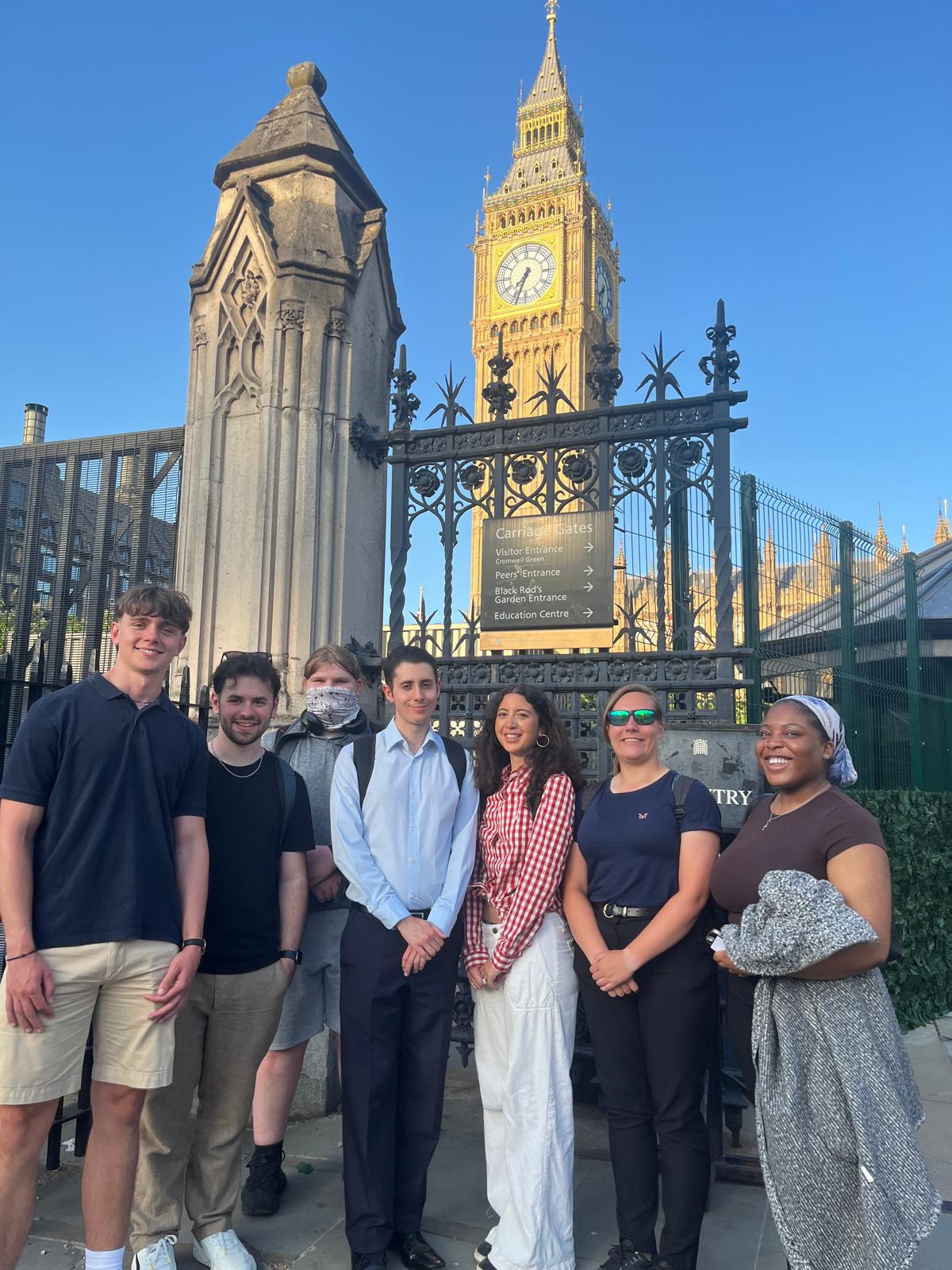
Hertfordshire and Surrey’s Youth Commissions on Policing and Crime were welcomed at the House of Commons, Westminster, for a Youth Sector Roundtable event on Tuesday, 1st July, hosted by Rebecca Paul MP, Hertfordshire Police and Crime Commissioner Jonathan Ash-Edwards, and deputy PCC for Surrey Ellie Vesey-Thompson. The roundtable featured a discussion shaped around ‘Youth Justice, Prevention and Community Safety for Children and Young People’. The event was also attended by representatives from organisations concerned with social mobility, youth justice, prevention, and broader social impact.

Three members of Hertfordshire’s Youth Commission on Policing and Crime Strategy, Max Brandon-Bravo, Filipe Costa, and John Malikovsky, share their reflections and personal highlights from the event.
The roundtable was structured around two key sessions: ‘The Youth Sector Now’ and ‘The Future of the Youth Sector.’ Both sessions enabled strong and hard-hitting insights to be shared across the floor. With six of us representing different youth commissions, the discussion brought out a wide range of honest perspectives, enriched by our own personal anecdotes. The energy in the exchanges powerfully reflected the mutual respect and empathy shared by everyone in the room.
It was enlightening for us as youth commissioners to discover the work that is taking place to improve the availability of spaces for young people. Borehamwood’s ‘Friday Night Project’ highlights just one of the many successes seen up and down the country, yet, as established at the roundtable, this should only be the start of an impact much larger. The topic of prevention was raised regarding today’s youth sector and how best to create a safer, more inclusive youth community – one free from knife crime and county lines. A community where vulnerable young people feel safe from being targeted by crime groups. Among some young people, carrying knives is seen as a way to stay safe, but this belief can contribute to an increased risk of violent altercations. Each Youth Commission has developed priority areas to tackle pressing issues in the Youth Sector, including Hate Crime, Exploitation, and fostering a more positive relationship between police and young people.
When delving into the future of the Youth Sector, an air of positivity filled the room. Despite financial obstacles, there is space, support and transformative organisations on hand to make a difference. Addressing young people’s worries about the environment they live in and understanding how to create a more cohesive bond between the youth, police, and local youth leaders is paramount to conducing a brighter future for Gen Z, and many generations to come.
Positive action in this space is possible, and everyone has a part to play. It was heartwarming to see everyone’s passion and unity in working toward a safer future for young people – not just one where they feel physically secure, but one where they truly feel they belong and can live happy, fulfilling lives in their towns and cities.
It was a true privilege to have attended the House of Commons and to voice the opinions of our young people. Youth empowerment helps turn young people’s lived experiences into measurable outcomes, positioning them as active contributors rather than reducing them to mere statistics on a page. Our voices will make a difference to those around us.
- Written by Max Brandon-Bravo, Filipe Costa, and John Malikovsky (members of the Hertfordshire Youth Commission)
The Youth Commission, enables young people aged 14-25 to inform decisions about policing and crime prevention in Hertfordshire, working in partnership with the Office for the Police and Commissioner (OPCC) and Hertfordshire Constabulary.
This outstanding work has culminated into the published report below: